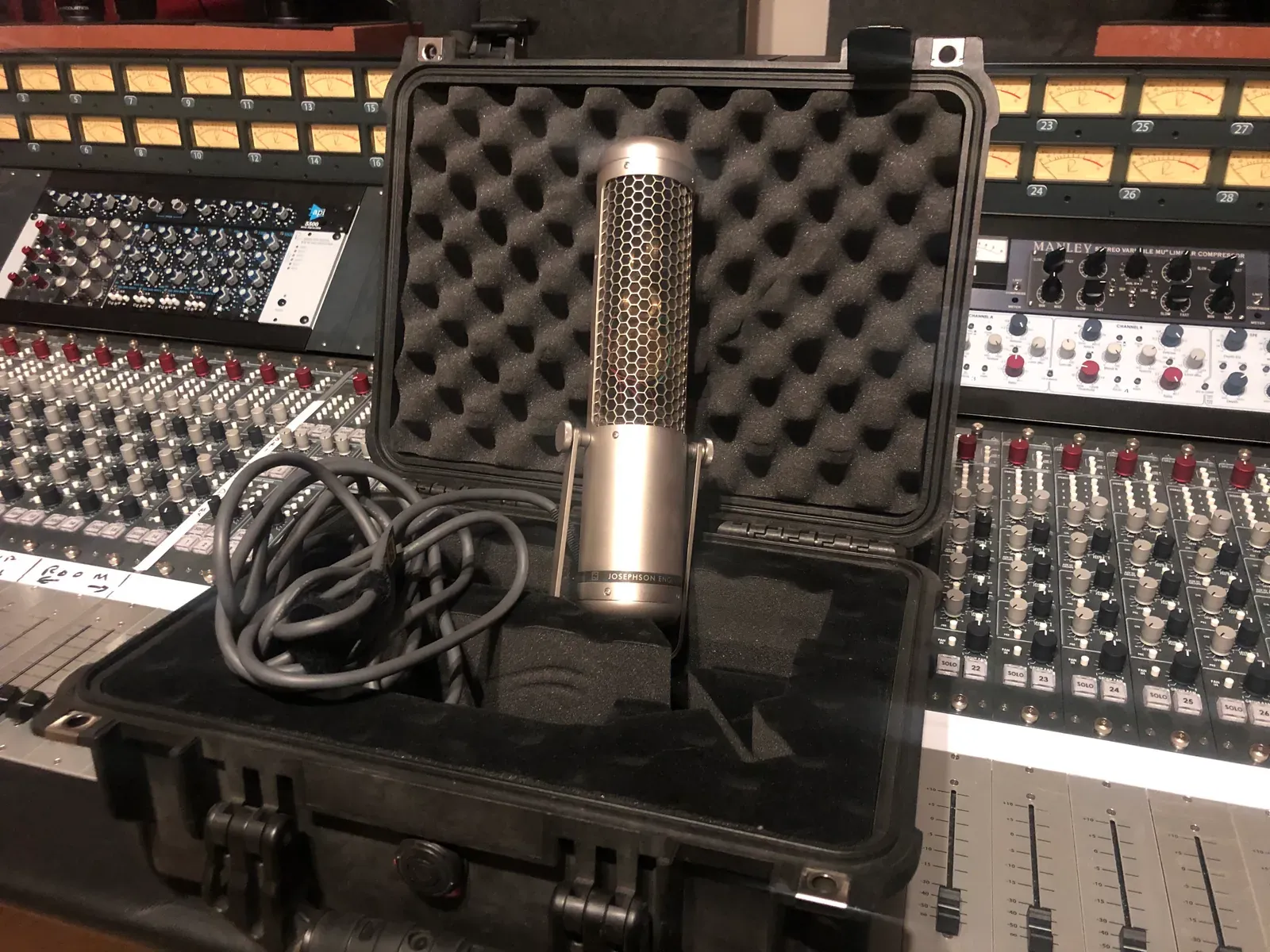
The C700S microphone seems to operate independently from the room it is in. I have demoed this microphone in aircraft hangars, basement studios and pro recording studios and the clients were blown away.
This microphone stimulates the engineer in all of us while being a benchmark at the same time.
By benchmark, I mean that I wish I would have started my audio journey with this microphone. Beyond the tech behind it and the flexibility it allows, it is the best first microphone for anyone in the high-end spectrum because it gives you the perspective for every other microphone you hear going forward. I have seen this in action by both selling them to beginners and witnessing the results in front of a group of audio engineers listening to productions from everyone attending, and with established engineers who could not believe what they were hearing.
The tech side is a glorious study that continues as you experiment with the four channels on mixdown based on three going to tape or the DAW after the vocalist leaves the session or while recording an entire band. Adding effects to the two sides of the Y axis, blending the X and W, it is a study in and of itself, and more importantly yields fantastic results. It is unique in the fact that after you record vocals for instance, you can make so many changes during mix down that are beyond what you may have originally planned for during the session.
When recording an entire bluegrass band, you actually stand where you want to place the microphone, arrange the players’ distance from that position to get the best sound and roll tape. That soundstage incredibly is exactly what you hear on mixdown. - Tik
Specs
- Type
- Pressure and pressure gradient condenser microphone transducers
- Capsule
- Three capsules, a 16mm omni element, a 26mm figure-8 capsule and an additional side-facing figure-8 capsule
- Pattern
- Variable directional pattern achieved by mixing output signals
- Outputs
- W (omni/pressure), X (front-facing figure-8/gradient), Y (side-facing figure-8/gradient)
- Frequency response
- 20-20,000 Hz ±2 dB from reference curve
- Sensitivity
- -41 dB ref 1 V/Pa (9 mV/Pa) for each signal
- Self-noise
- 15 dB SPL, A-weighted
- Maximum SPL
- 135 dB SPL at 1k load for <1% THD
- Power
- P48 phantom, 4 mA per output
- Connector
- 7-pin XLR type
- Dimensions
- Diameter 63mm (100 mm wide at yoke), length 365 mm
Source: Josephson Series Seven C700 data sheet (PDF)